

If you’ve ever tried to fix a scratch or order replacement paint for your car, you probably realised it’s not as simple as choosing “red” or “silver”. Without the right paint code, the result will often stand out – a mismatched panel, a faded spot, or a blotchy finish. This post will walk you through what a car spray paint code actually is, how to locate it, and why it plays such a critical role when you pick up spray cans or touch-up kits like those from Dupli‑Colour or PPG.
“Did you know? The global automotive touch-up paints market was valued at USD 837 million in 2024, and is projected to reach USD 1.28 billion by 2032 – a growth that shows how many vehicle owners now care about maintaining original paintwork.”
Key Takeaways
-
- A car spray paint code pinpoints the exact shade and finish of your car from the factory.
-
- You usually find it on a sticker in the door-jamb, boot lid, under the bonnet, or via the VIN.
-
- Using spray or touch-up paint matched by that code helps achieve a near-perfect colour match with minimal fuss.
-
- Incorrect or generic paint often results in visible mismatches, reduced protection, or future repainting needs.
-
- The global demand for OEM-matched touch-up paints is rising — emphasising the importance of knowing your paint code before buying.
What Is a Car Paint Code?
A car paint code – also referred to as a spray paint code – is a unique identifier assigned by the vehicle manufacturer that defines the exact shade and finish of your car’s original paint. It is not a generic colour name, but an alphanumeric or numeric code that maps to the precise formula used on the assembly line.
-
- Many codes consist of three to six characters (for example, “B92M”, “LA7W”, or “Y7J”).
-
- The code ensures you get the correct base colour, metallic or pearlescent effect, and clear‑coat finish.
-
- Car makers such as Ford, Toyota, Volkswagen and others embed these codes to ensure consistency and paint‑matching fidelity across batches.
Using that code – rather than saying “navy blue” or “metallic grey” – means any replacements or touch-ups more closely align with the original finish.
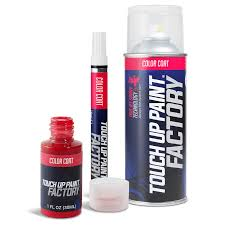
How to Find Car Paint Code on Your Vehicle
Knowing how to find a car paint code is the first essential step before you buy spray paint or touch-up kits. Here are the common places to check:
-
- Driver’s side door jamb or B‑pillar label – Often a small sticker or plate listing VIN, paint code, trim code, etc.
-
- Boot / trunk lid – On many cars the sticker is placed inside the boot, under the spare-wheel cover or on the side wall.
- Glove box, under the bonnet, or in the fuel-filler flap – Depending on manufacturer, these can also hide the paint code.
- Owner’s manual or warranty booklet – Some documentation includes the paint code.
- Vehicle identification system on manufacturer’s website or dealership – Provide the VIN to get the exact paint code.
- Third‑party paint‑code databases – Several online platforms allow VIN lookup to fetch the paint code.
If the original label is damaged or missing (common in older cars or after repairs), using a VIN lookup or consulting the dealership is safest.
Pro tip: Always double-check the code – a minor digit error (e.g. “B92M” vs “B29M”) can result in a significantly different shade.
Why Car Paint Code Matters – More Than Meets the Eye
Using the correct paint code brings several advantages. It impacts appearance, resale value, protection, and longevity of repairs. Here’s why car paint code matters:
-
- Accurate colour match: A correct code ensures your new paint blends seamlessly with existing panels. This matters if you’re doing a bumper repair or patching a scratch.
-
- Preserves resale value: Mismatched panels are one of the first things a prospective buyer will spot. Proper colour match suggests careful maintenance and authenticity.
-
- Protects against corrosion and wear: Paint is not just cosmetic — it protects steel from rust, UV damage, and environmental contaminants. Using a paint that diverges from the original may mean thinner coating or wrong finish, reducing protection.
-
- Supports uniform sheen and finish: Modern cars often use specific base-coat + clear-coat systems. Without the right code, you risk improper sheen (flat vs glossy), metallic flake mismatch, or uneven coverage.
-
- Simplifies touch-up and repairs: When you get “car touch up paint by code,” you avoid trial-and-error, wasted paint, and repainting due to incorrect shade.
For example, if you use a generic “red” when the original was “Candy Red Metallic – code GPJ,” the repaired panel may look slightly brighter or duller when viewed from different angles.
Car Touch Up Paint by Code — Best Practice for DIY Repairs
If you’re handling a scratch or minor paint chip yourself, using touch-up paint matched by code is often the most cost-effective approach. But it helps to follow best practice.
How to proceed when doing it yourself:
-
- Clean the damaged area thoroughly – Remove wax, dirt, grease; wash with soap and water, then wipe with isopropyl alcohol.
- Sand or scuff gently (if required) – Use fine sandpaper (e.g. P800–P1200) only if the chip has rough edges. Wipe off dust after.
- Apply primer if bare metal is exposed – Skip only if you have a scratch pen meant for surface-level chips.
- Shake and apply the correct base‑coat spray or brush — match exactly based on paint code. Brands like Dupli‑Colour and PPG offer OEM‑coded aerosol sprays.
- Use light, even coats – Several thin coats beat one heavy coat. This helps avoid runs or blotchy finish.
- Let it dry thoroughly – Wait the recommended time (often 24–48 hours). Then, apply a clear-coat if needed to match original gloss.
- Polish gently after curing – Use a fine polish to blend the new paint into old paint if sheen looks different.
When you use car touch up paint by code, the repaired section becomes nearly invisible — especially in daylight and at a glance. Many DIYers achieve 90‑95% colour match using OEM‑coded aerosol kits.
Common Mistakes When You Ignore the Paint Code
Choosing the “closest colour” by name rather than code often leads to problems. Some typical mistakes include:
-
- Using a paint with slightly different shade or undertone — visible as a patch, especially under sunlight.
-
- Overspraying — causing flaky edges or paint bleeding onto adjacent panels.
-
- Not applying clear-coat or applying wrong clear — results in dull or inconsistent finish.
-
- Skipping primer when metal is exposed — exposing the vehicle to rust.
-
- Painting without cleaning or degreasing — leading to peeling or poor adhesion.
A mismatch might be subtle under garage light, but glaringly obvious under sunlight or when wet.
When Factory Code Is Lost — What to Do
Sometimes your car’s paint label might be missing or unreadable. In that case:
-
- Use your Vehicle Identification Number (VIN) to request paint code info from a dealership.
-
- Locate a service history or purchase receipt — many records list paint code alongside trim and options.
-
- Use online VIN-lookup tools or third-party paint-code databases — several services compile manufacturer data.
-
- As a last resort, use a spectrophotometer or colour-matching service — some paint shops can scan a small panel and generate a matching formula.
Even if you require a bit more effort, it’s well worth it. Using the correct code ensures that your car’s replacement paint has the right base pigment, metallic flake concentration, and clear-coat finish.
Final Thoughts: Why Taking Code Seriously Pays Off
Using the correct car spray paint code ensures repairs – whether you use a full spray kit from Touch Up Paint Factory, PPG, or a DIY aerosol – return your vehicle to a near-factory finish. Correct painting preserves resale value, protects against rust and UV damage, and respects the original manufacturing finish.
When you choose “car touch up paint by code,” you skip guesswork, avoid mismatched panels, and get results that last. For car owners who value their vehicle’s appearance and integrity, taking time to locate the paint code can save time, money, and frustration down the road.
Frequently Asked Questions
Can I just pick a colour name like “Metallic Silver” instead of using the paint code?
No – colour names are not precise. “Metallic Silver” may correspond to several different formulas. Only the paint code guarantees an exact match.
My paint code sticker is damaged or missing. Can I still get the right paint?
Yes. You can ask a dealership using your car’s VIN, check old service paperwork, or use online paint-code databases. As a fallback, some body shops can colour-match directly from your existing paint.
If I use a spray paint matched by code, will the repaired panel look identical under all light conditions?
In most cases yes — especially if you follow correct prep, base-coat, and clear-coat steps. Minor differences might appear under extreme lighting or when wet, but will be negligible compared to generic paint.
Which products are best for DIY touch-up paint?
Brands like Dupli‑Colour and PPG offer OEM-coded aerosol sprays and touch-up kits that work well for small chips and scratches. They are widely available and generally easier for non-professionals to apply.
Does using OEM-matched paint affect my car’s resale value?
Yes. Mismatched paint panels tend to raise suspicion about repairs or accidents. Using paint matched by code helps preserve the original appearance, making the car more attractive to potential buyers.


